Beyond Melatonin: A Multi-Pathway Approach to Nighttime Support
Begin by explaining why melatonin has become one of the most recognized ingredients associated with sleep, while emphasizing that nighttime wellness involves more than circadian rhythm alone. Discuss how daily stress, mental overactivity, emotional tension, difficulty winding down, and the inability to mentally transition out of “work mode” can all influence nighttime relaxation and overall sleep quality.
Introduce the idea that nighttime support does not have to rely on a single ingredient or pathway. Explain how a multi-ingredient formula can be designed to support different aspects of the nighttime transition, including mental calm, relaxation, stress and mood balance, botanical nighttime support, and nutritional support.
Organize the article around the following four functional layers:
1. Mental Calm & RelaxationExplain the roles of GABA and L-Theanine in supporting a calmer mental state and helping the body transition from daytime stimulation into a more relaxed nighttime routine. Emphasize that the goal is not to “force sleep,” but to help support the process of slowing down and shifting gears at night.
2. Stress & Mood SupportDiscuss Phosphatidylserine and Casein Hydrolysate in the context of daily stress, mental load, and the way daytime tension can carry into the evening. Explain how supporting stress balance may be relevant for people who feel physically tired but mentally “switched on” at night.
3. Botanical Nighttime SupportIntroduce Hops Extract, Perilla Seed Extract, DeepSleep™ Sophora japonica Powder, and DeepSleep™ Citrus reticulata Peel Powder as complementary botanical ingredients within a broader nighttime relaxation formula. Explain their role as part of a layered botanical approach rather than presenting any single botanical as a standalone sleep solution.
4. Nutritional SupportExplain the supportive role of Vitamin B6 within the overall formula and how nutritional cofactors can complement a multi-ingredient nighttime wellness approach.
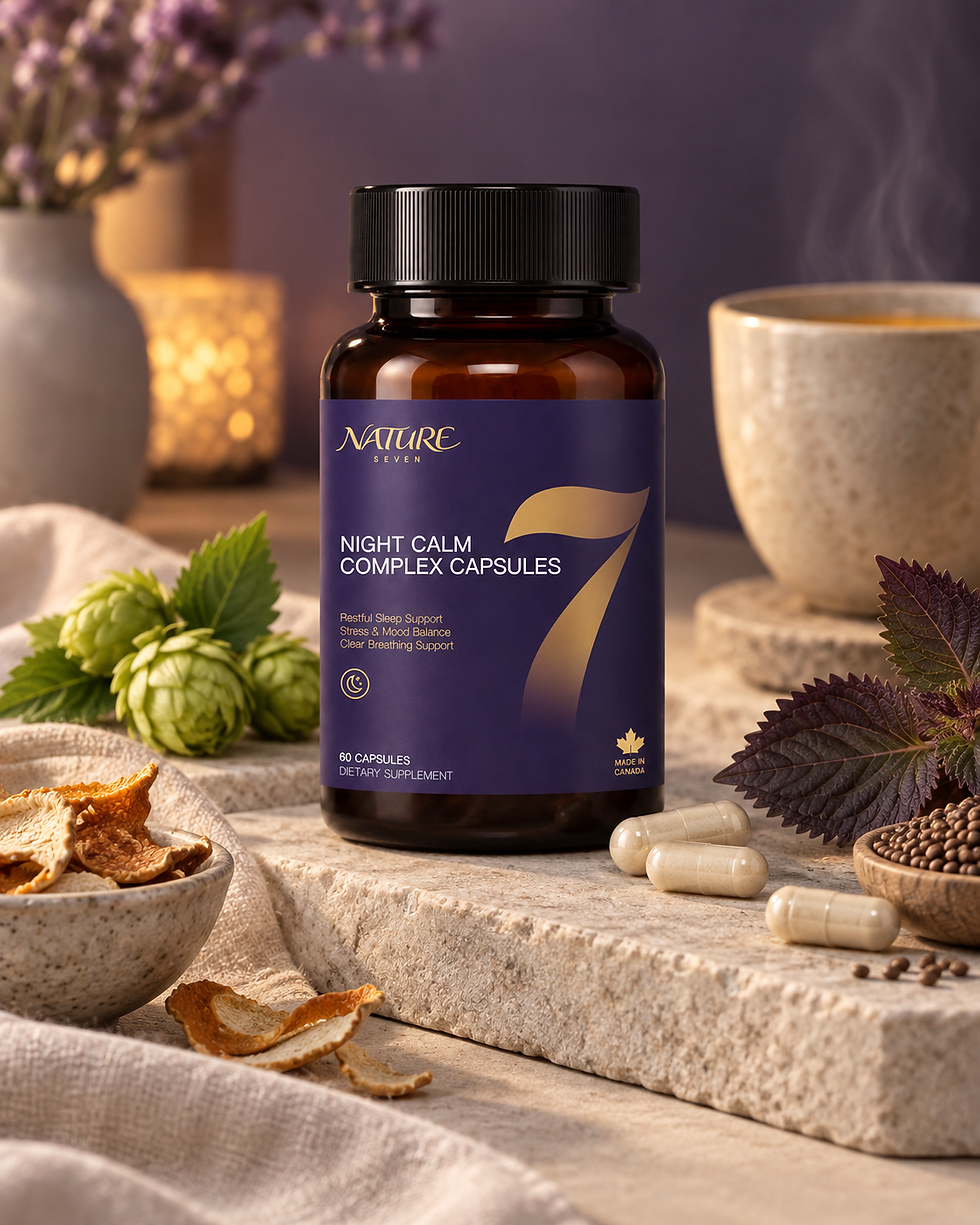
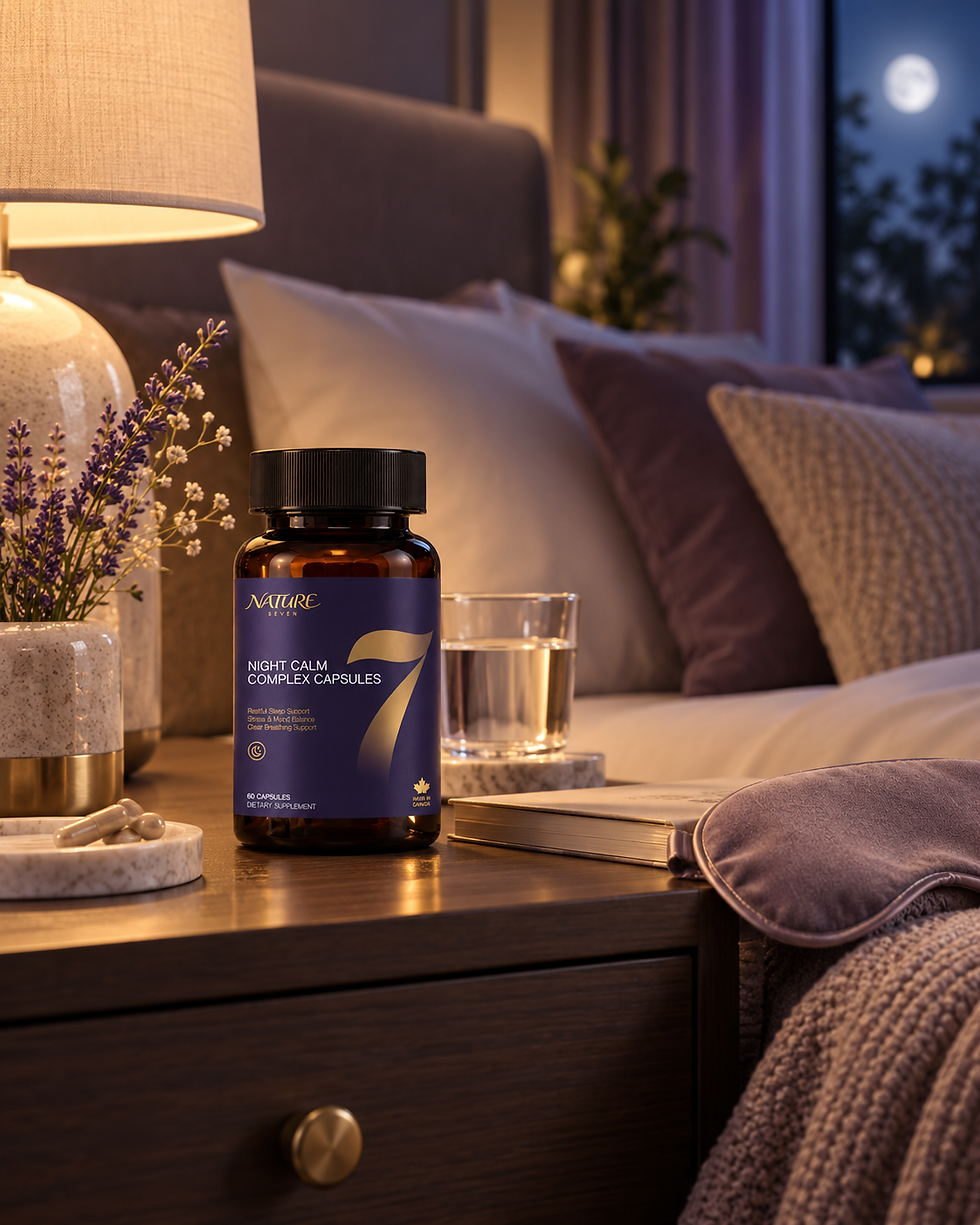
In the second half of the article, naturally introduce NATURE SEVEN Night Calm Complex Capsules as a melatonin-free, multi-pathway nighttime formula designed around relaxation, stress and mood balance, and healthy nighttime support.
Clearly introduce the formula using the following per-capsule amounts:
EZGABA®
L-Theanine
Phosphatidylserine
Hops
Perilla
Casein Hydrolysate
DeepSleep™ Sophora japonica Powder
DeepSleep™ Citrus reticulata Peel Powder
Vitamin B6
Explain that the formulation philosophy is based on supporting multiple aspects of the nighttime experience rather than relying on a single sleep ingredient.
Use the central idea:
“Sleep isn’t controlled by one switch — and nighttime support doesn’t have to rely on one ingredient.”
Naturally discuss the types of consumers who may be interested in this approach, such as:
People who feel physically tired but mentally active at night
People who find it difficult to unwind after work
People experiencing high levels of everyday stress
People whose minds remain busy when they go to bed
People looking for a melatonin-free nighttime wellness formula
Keep the tone modern, science-informed, premium, trustworthy, and consumer-friendly, similar to a high-end North American wellness brand.
Do not make disease-treatment claims. Avoid language suggesting the product treats insomnia, anxiety, depression, or any medical condition. Do not present the product as a sleeping pill or sedative. Avoid exaggerated promises such as “fall asleep instantly,” “cure insomnia,” or “guaranteed deep sleep.”
The article should feel primarily educational, with the product introduced naturally after the reader understands the broader relationship between stress, mental activity, relaxation, and nighttime wellness.
End with a concise takeaway explaining that melatonin may be one part of the sleep conversation, but a broader nighttime wellness strategy may also consider relaxation, stress, mood, and the ability to mentally disengage from the day.



Comments