Why Your Body Feels Tired But Your Mind Wont Stop At Night Sleep Support And Evening Calm
The body can be ready for bed long before the mind gets the message.
Many people recognize the pattern. Shoulders feel heavy. Eyes feel tired. The day is clearly over. Then, as soon as the room gets quiet, the mind starts reviewing conversations, unfinished tasks, tomorrow’s schedule, and everything that did not get processed during the day.
This “tired but wired” feeling is not a sign of poor willpower. It often reflects a nervous system that has spent the day in high-demand mode and has not yet shifted into recovery mode. Daily stress, emotional tension, constant decisions, screen exposure, and mental overactivity can all make nighttime relaxation harder, even when physical fatigue is real.
A healthier evening routine can help bridge that gap. The goal is not to force sleep. The goal is to create the right conditions for calm, so the body and mind can move toward healthy sleep more naturally.
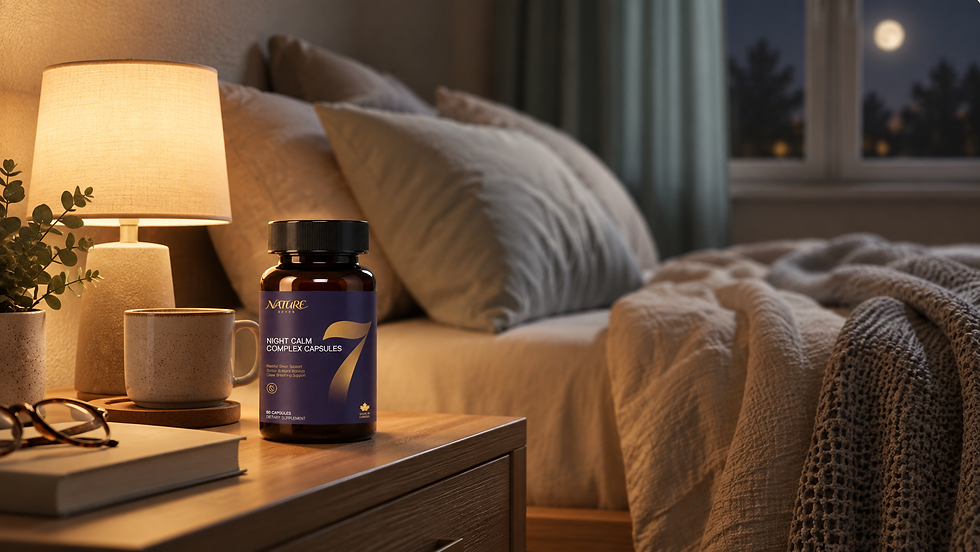
Why the mind stays active when the body feels exhausted
Physical tiredness and mental calmness are related, but they are not the same. You can spend the whole day moving, commuting, training, parenting, studying, or working and still feel mentally alert at night.
That happens because the brain does not shut off simply because the muscles feel tired. It responds to signals from the nervous system, hormones, light exposure, habits, and emotional state.
When daily stress builds, the body may stay in a heightened state of readiness. Stress hormones and alertness signals are useful during the day. They help with focus, reaction time, and problem solving. At night, those same signals can make it harder to settle.
Common signs of this pattern include:
Feeling sleepy on the couch, then alert once in bed
Replaying conversations or decisions from the day
Planning tomorrow in detail
Feeling emotionally tense without a clear reason
Noticing a racing mind even in a quiet room
Waking during the night and immediately thinking
This is where sleep and stress are closely connected. Stress does not have to be extreme to affect rest. Even normal daily pressure can keep the mind engaged if there is no clear transition between activity and recovery.
Emotional tension can also show up at night. During the day, people often push through uncomfortable feelings because there are tasks to complete. At night, with fewer distractions, those feelings can rise to the surface. The result is a body that wants rest and a mind that is still trying to sort, solve, or protect.
Mental overactivity is especially common when the evening routine looks too much like the daytime routine. Bright screens, late messages, unfinished work, intense shows, heavy conversations, and constant input all tell the brain to stay engaged. The body may be tired, but the environment keeps sending “stay on” signals.
How to shift out of work mode before bed
A strong evening routine does not need to be complicated. In fact, it works best when it feels repeatable. The nervous system responds well to rhythm. When the same calming cues happen most nights, the brain begins to recognize them as signs that the active part of the day is ending.
The first step is creating a clear boundary between “doing” and “winding down.” This can be simple. Close the laptop. Put the phone on charge outside the bedroom. Change into comfortable clothing. Dim the lights. Take a short walk. Tidy one surface, then stop.
These small actions matter because they create a psychological handoff. They tell the brain that unfinished tasks can wait.
A useful approach is to build an evening routine in three layers.
Clear the mental runway
Spend five minutes writing down anything that is circling in the mind. This is not journalling for perfection. It is a practical brain dump.
Try noting:
Tasks to handle tomorrow
One worry that keeps repeating
One thing that went well today
One next step for anything unresolved
This helps reduce the need to rehearse tasks in bed. The mind relaxes more easily when it trusts that important thoughts have been captured.
Reduce stimulation gradually
A sudden drop from full-speed activity to bed can feel jarring. Instead, step down stimulation over the last hour of the day.
Lower light levels. Choose slower music or silence. Avoid emotionally charged content close to bedtime. If possible, shift from interactive screens to passive or non-screen activities, such as reading, stretching, breathing, or preparing for the next morning.
Use the body to calm the mind
The body can send powerful safety signals to the brain. Slow breathing, gentle mobility, a warm shower, or progressive muscle relaxation can all support nighttime relaxation.
One simple practice is extended exhale breathing. Inhale comfortably through the nose, then exhale a little longer than the inhale. Repeat for a few minutes. Longer exhales can help cue the parasympathetic nervous system, which is associated with rest and recovery.

Nutritional support can complement better sleep habits
Evening habits form the foundation, but nutritional support can also play a role in a healthy sleep routine. The body relies on nutrients and natural compounds to support neurotransmitters, stress response, muscle relaxation, and mood balance.
This does not mean a capsule can replace healthy habits. Late caffeine, irregular sleep timing, heavy evening stress, or constant screen exposure can still work against rest. A formula works best when it fits into a broader pattern of sleep support that includes light management, stress support, regular wind-down cues, and consistent timing.
Food choices matter too. A very heavy meal close to bed can make the body feel uncomfortable. Skipping dinner or going to bed hungry can also disturb rest for some people. A balanced evening meal with protein, fibre-rich carbohydrates, and healthy fats may help support steadier energy before bed.
Caffeine timing deserves special attention. Caffeine can stay active in the body for many hours. For more sensitive people, an afternoon coffee or strong tea may still affect sleep quality later. Alcohol can also make people feel sleepy at first, but it may interfere with sleep continuity and recovery.
Nutritional sleep formulas are best viewed as part of a calming ritual. Taking a supplement at a consistent time, dimming the lights, and beginning a predictable wind-down routine can create a stronger signal than any one step on its own.
That is the idea behind a multi-ingredient nighttime wellness formula. Instead of focusing on one pathway, it can support several aspects of evening calm at the same time, including mental quiet, relaxation, stress response, and mood support.
How NATURE SEVEN Night Calm Complex Capsules fit into an evening routine
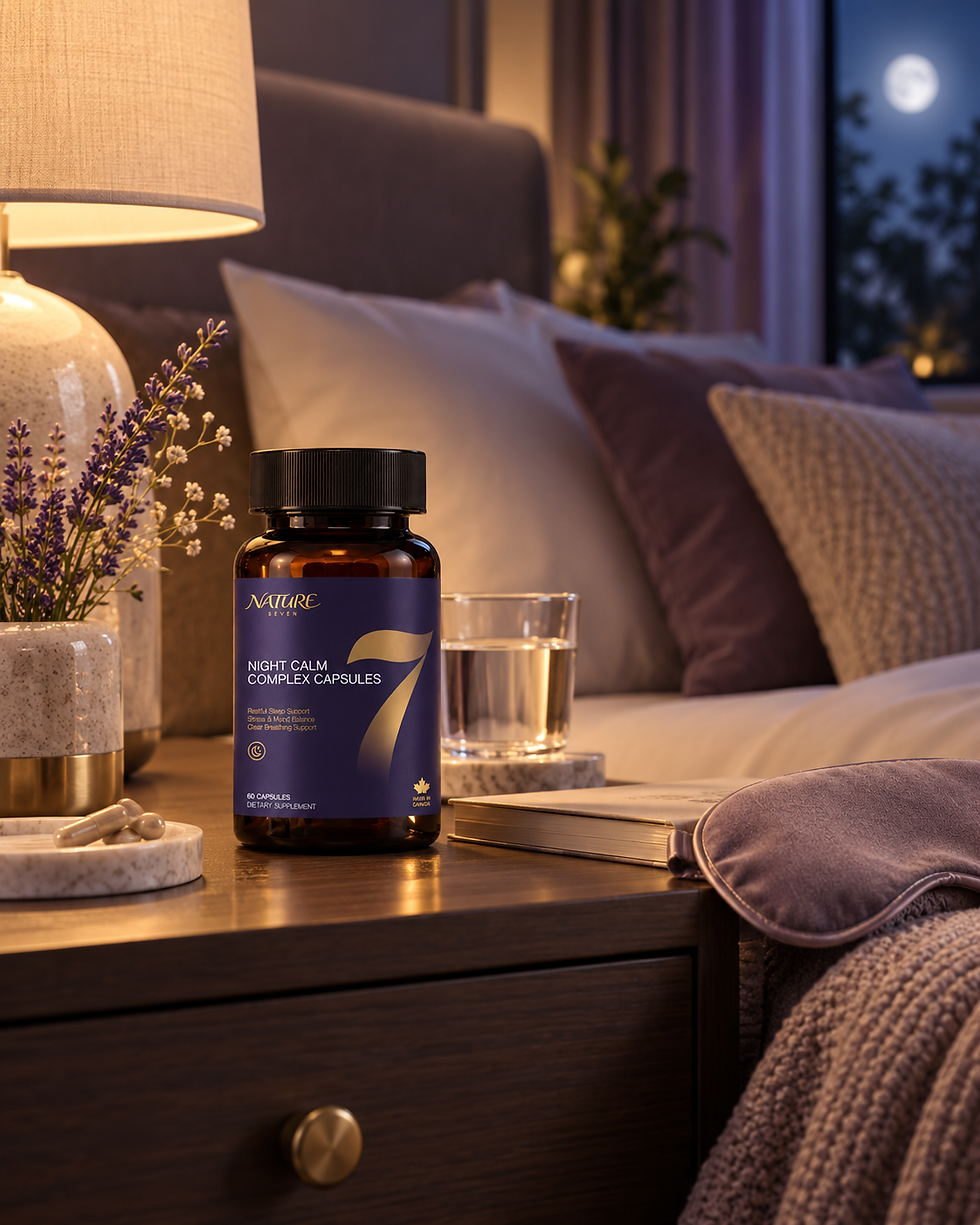
NATURE SEVEN Night Calm Complex Capsules are designed as a nighttime wellness formula for people who want support for relaxation, stress and mood balance, and healthy sleep. The formulation is built around the reality that rest is influenced by more than one factor.
For many people, the challenge is not simply “falling asleep.” It is the whole state that comes before sleep. The mind feels busy. The body holds tension. The stress response has not settled. Mood feels slightly unsettled after a demanding day.
A thoughtful formula can help support that transition. NATURE SEVEN Night Calm Complex Capsules bring together ingredients with complementary roles, including GABA, L-Theanine, Phosphatidylserine, and Hops Extract. Each ingredient has a different place in the relaxation picture.
GABA supports the body’s calming pathways
GABA is a key inhibitory neurotransmitter in the body. In simple terms, inhibitory signals help balance excitatory signals. When the mind feels switched on at night, supporting calming pathways can be part of the relaxation process.
Night Calm includes EZGABA®, a branded form of gamma-aminobutyric acid. GABA is often used in nighttime wellness formulas because of its connection to calmness and relaxation. While individual responses can vary, the ingredient fits the goal of helping the body shift away from a highly alert state.
The value of GABA in this type of formula is not about sedation. It is about supporting a calmer internal environment, especially when paired with habits that reduce stimulation.
L-Theanine supports relaxed focus and mental calmness
L-Theanine is an amino acid naturally found in tea leaves. It is widely recognized for supporting a calm, clear state without making people feel dull or groggy.
That makes it especially relevant for evening mental overactivity. Some nighttime ingredients focus mostly on physical relaxation. L-Theanine helps address the mental side of the wind-down process, including the feeling of being alert but not at ease.
In a sleep-focused routine, L-Theanine may help support a smoother shift from active thinking to quiet awareness. It pairs well with screen reduction, breathwork, and a consistent bedtime rhythm.
Phosphatidylserine supports a healthy stress response
Phosphatidylserine is a phospholipid found in cell membranes, including in the brain. It is often included in wellness formulas that support cognitive function and stress balance.
At night, its role is tied to the stress response. A demanding day can leave the body with a strong “keep going” signal. Phosphatidylserine may help support a healthier response to stress, which matters when the goal is to move out of work mode and into recovery.
This ingredient adds a different layer to the formula. Rather than focusing only on relaxation, it helps support the systems involved in stress adaptation and nighttime recovery.
Hops Extract supports traditional nighttime relaxation
Hops are best known as a botanical used in brewing, but hops extract also has a long history in traditional relaxation formulas. In nighttime wellness, hops are often used to support calmness and restfulness.
Botanicals can add a gentle, plant-based dimension to a formula. Hops Extract complements amino acids and phospholipids by supporting the broader feeling of evening relaxation. For people building healthy sleep routines, this can help reinforce the sensory and physiological shift toward rest.

Why a multi-ingredient approach makes sense for evening calm
Nighttime rest is not controlled by one switch. It is shaped by nervous system tone, stress response, mood, light exposure, daily habits, and learned routines. That is why a multi-ingredient approach can make sense.
GABA can support calming pathways. L-Theanine can support mental calmness. Phosphatidylserine can support stress balance. Hops Extract can support a traditional botanical route to relaxation. Together, they address different parts of the same evening challenge.
This layered approach is especially useful because “tired but wired” rarely has just one cause. It may come from emotional tension, a full schedule, late-day caffeine, unresolved tasks, or too much stimulation. A formula that supports several relaxation pathways can fit more naturally into real life.
Still, the best results come from pairing supplementation with consistent habits. A capsule taken in the middle of a chaotic evening has less support around it than one taken as part of a calm ritual.
A simple Night Calm routine might look like this:
Finish demanding work and messages at a set time when possible.
Dim lights and reduce screen intensity.
Write down tomorrow’s top priorities.
Take NATURE SEVEN Night Calm Complex Capsules as directed on the label.
Spend 10 to 20 minutes with a quiet activity, such as reading, stretching, or breathwork.
Keep the bedroom cool, dark, and calm.
The routine does not need to be perfect. Consistency matters more than complexity.
Small evening changes that can improve sleep quality over time
Healthy sleep is built during the day as much as at night. Morning light exposure, movement, balanced meals, stress breaks, and caffeine timing all influence how easily the body winds down later.
During the day, short recovery pauses can prevent stress from building into the evening. Even two minutes of slow breathing between tasks can help. A short walk after dinner can support digestion and create a natural transition. Setting a “last check” time for messages can reduce the feeling that the day never fully ends.
At night, protect the bed as a cue for rest. If possible, avoid using it for work, scrolling, or problem solving. The brain learns from repetition. When the bed becomes associated with worry or stimulation, it may take longer to relax there.
It also helps to lower expectations. Sleep responds poorly to pressure. Telling yourself “I must fall asleep now” often creates more alertness. A better goal is to practise calm. Resting quietly in a dark room still supports recovery, even before sleep arrives.
Nighttime calm is a skill the body can relearn. Start by reducing stimulation, giving the mind a place to put unfinished thoughts, and using consistent cues that mark the end of the day. Nutritional support, including NATURE SEVEN Night Calm Complex Capsules, can complement that foundation by supporting relaxation, stress and mood balance, and healthy sleep.
This article is for informational purposes only and is not medical advice. If sleep difficulties are persistent, severe, or linked with a health condition, speak with a qualified healthcare professional.


Comments